
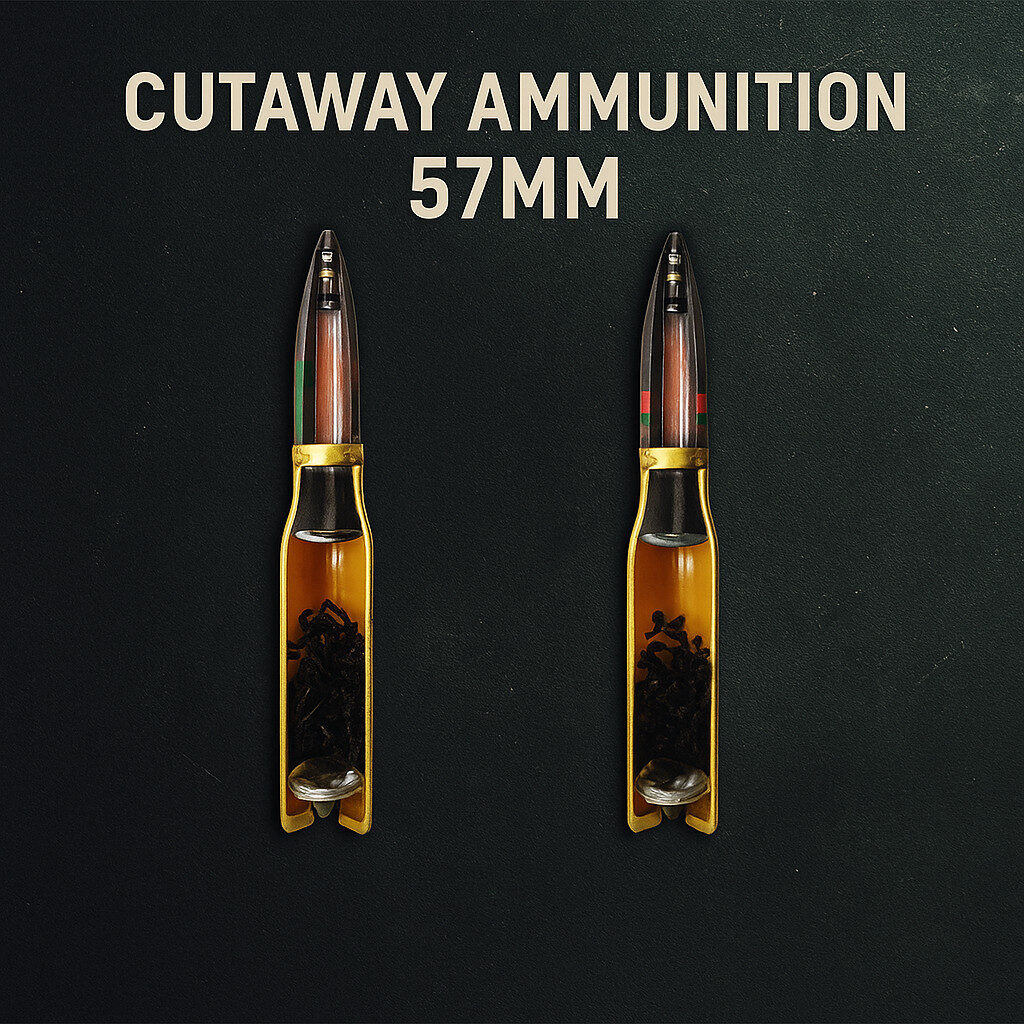
Description
57mm Ammunition – Overview
57mm caliber ammunition is used primarily in naval guns, anti-aircraft systems, and infantry support cannons. It is a high-velocity, high-explosive round capable of engaging air, ground, and sea-based threats.
Typical applications:
-
Anti-aircraft defense
-
Naval shipborne cannons
-
Infantry support weapons (historically)
-
Modern autocannons on wheeled/turreted platforms
Ammunition Type (from Image)
The image shows cross-sections of two 57mm high-explosive projectiles, allowing a view into their internal structure.
Internal Components (Cutaway View)
-
Projectile tip – usually hardened or fused (for impact or proximity detonation)
-
Explosive charge – visible as black granular or pressed powder (likely TNT, RDX, or similar)
-
Casing – brass or steel shell holding the explosive charge
-
Driving band – copper/brass ring to engage barrel rifling
-
Propellant charge – visible in the base of the shell (for launching the projectile)
-
Fuze – mechanical or electronic (top section), triggers explosion on impact or near target
Common Variants of 57mm Rounds
1. HE (High-Explosive)
-
Purpose: Blast effect against soft targets and aircraft
-
Detonation: Impact or proximity
-
Common in: Bofors 57mm naval guns, S-60 AA guns
-
Lethal radius: 10–15 meters
2. HE-T (High-Explosive Tracer)
-
Includes a visible tracer element in the rear
-
Allows gunners to track flight path, correct aim
-
Still has explosive payload
3. AP-T (Armor-Piercing Tracer)
-
Designed to penetrate lightly armored vehicles
-
May include small explosive or incendiary element
-
Often has steel or tungsten core
4. Proximity Fuzed Rounds (Naval Use)
-
Explodes near target using radar or IR sensor
-
Common in modern shipborne 57mm autocannons (e.g., Bofors 57mm Mk 110)


