
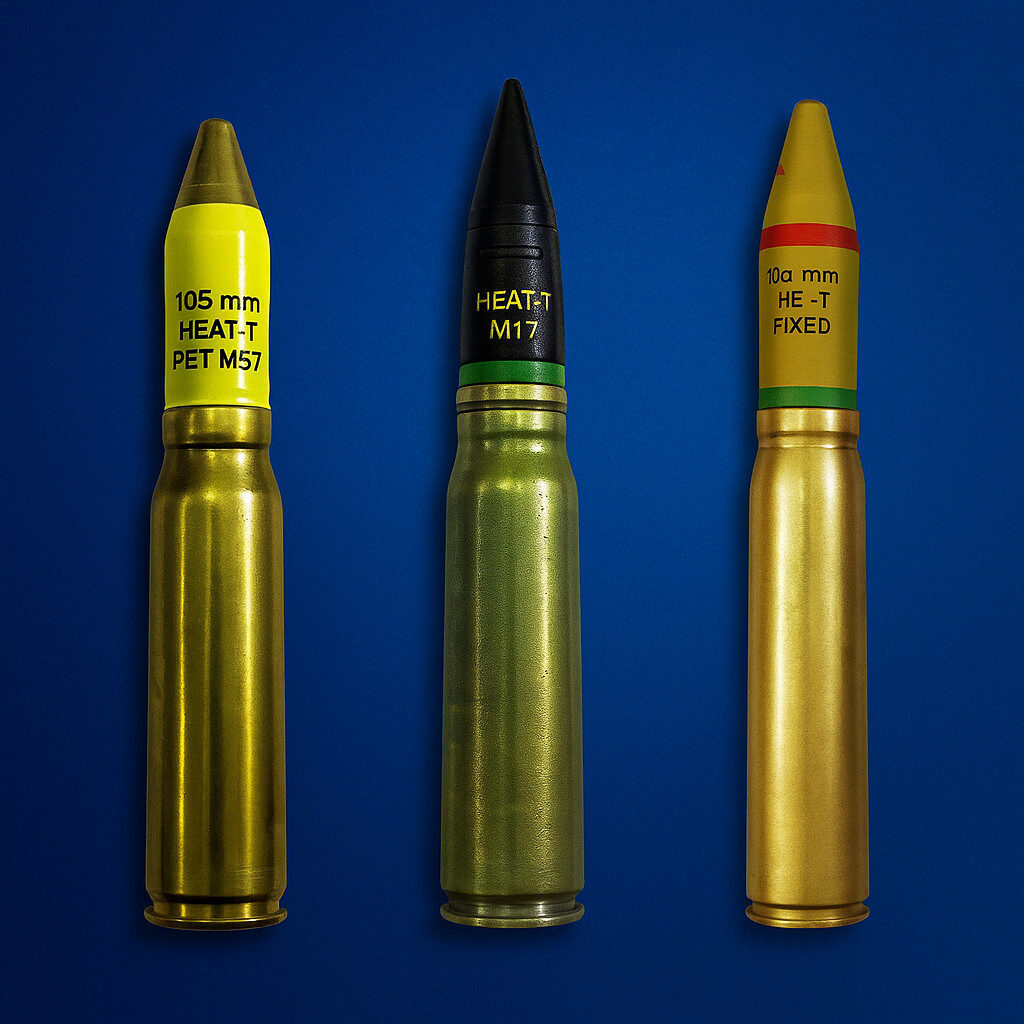
Description
20 mm Specialized Ammunition – Overview
20 mm caliber ammunition is used in autocannons, aircraft guns, helicopter-mounted cannons, and vehicle weapon systems. It serves multiple roles: anti-aircraft, anti-vehicle, armor-piercing, high-explosive, and training purposes.
General Features
- Caliber: 20 mm
- Types:
- HEI (High-Explosive Incendiary)
- API (Armor-Piercing Incendiary)
- TP (Target Practice)
- HEIT (High-Explosive Incendiary Tracer)
- SAPHEI (Semi-Armor-Piercing High-Explosive Incendiary)
- HEF (High-Explosive Fragmentation)
- Fuzing: Usually point-detonating or delay fuzes
- Use:
- Engaging air targets (planes, drones, missiles)
- Light armored vehicles
- Personnel in open or behind light cover
- Soft targets like radars, fuel tanks, trucks
Common Weapon Systems
- M61 Vulcan (rotary cannon on F-16, F/A-18)
- GIAT 20M621 (used on helicopters and vehicles)
- Oerlikon KAA and KAD (ground-based or naval autocannons)
- M39 cannon, Hispano-Suiza HS.820, etc.
Typical Specifications
- Projectile Diameter: 20 mm
- Cartridge Lengths: Commonly 20×102 mm, 20×110 mm, 20×128 mm, or 20×139 mm
- Projectile Weight: ~100–120 grams
- Muzzle Velocity: ~850–1,050 m/s
- Effective Range: ~1,500–2,000 meters (ground); longer for air-to-air
Color Coding & Tips (Visual ID)
- Yellow Tip: High-Explosive
- Red Band: Incendiary or Tracer
- Black Tip: Armor-Piercing
- Blue Tip: Inert or Target Practice
- Green Band: Often indicates HEAT or special warhead types
Specialized Roles
- Air Defense: Against fast-moving aerial targets
- Vehicle Armament: Against infantry, light armor, and buildings
- Naval Defense: CIWS (Close-In Weapon Systems) against missiles and aircraft
- Helicopters & Aircraft: For strafing ground targets or air-to-air engagement


