Description
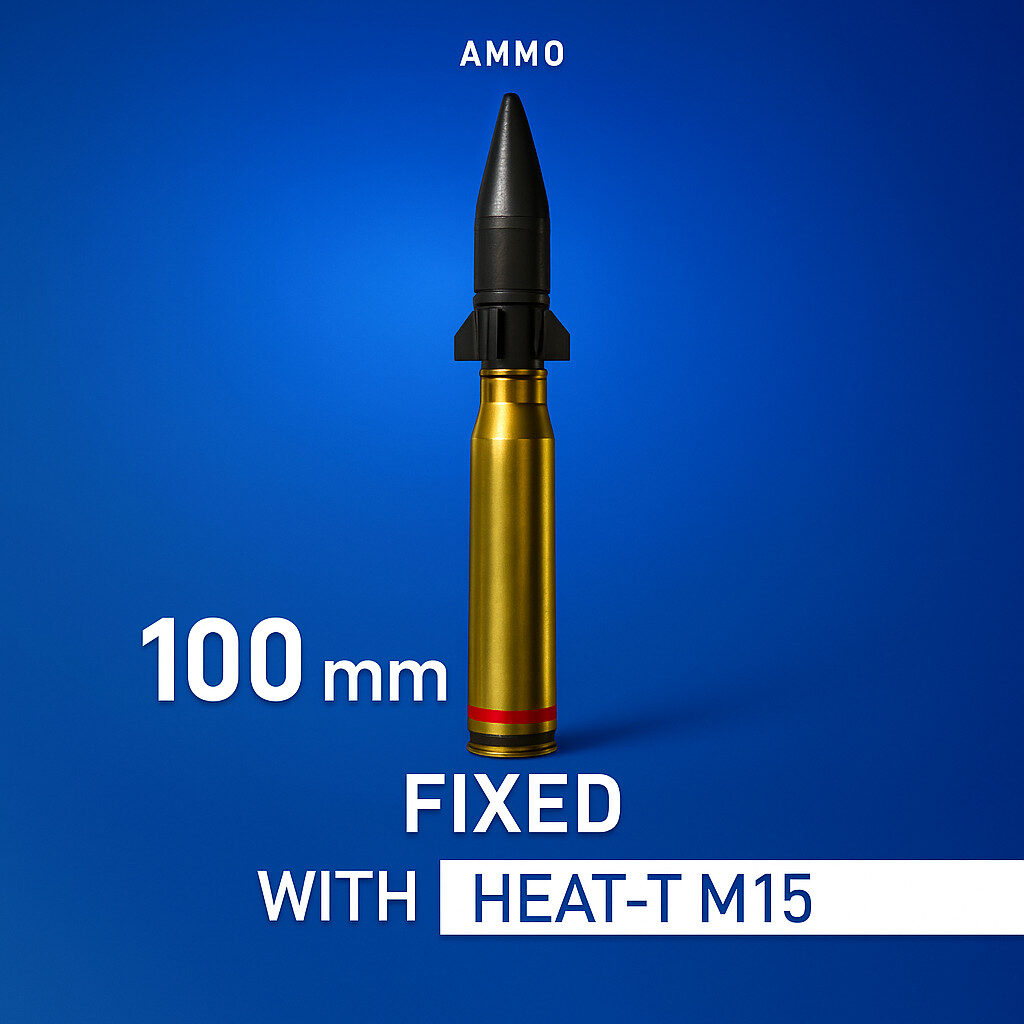
100 mm Fixed Ammunition with HEAT-T M15 Overview
The 100 mm HEAT-T M15 round is a High-Explosive Anti-Tank (HEAT) cartridge with Tracer (T), used in 100mm tank and anti-tank guns. It is designed to defeat armored vehicles, especially tanks, using a shaped charge warhead that focuses explosive energy to penetrate armor.
The round is fixed-type, meaning the projectile and cartridge case are a single unit, intended for rapid loading in combat conditions.
Key Features
- Caliber: 100 mm
- Ammunition Type: Fixed
- Projectile Type: HEAT (High-Explosive Anti-Tank)
- Designation: M15
- Tracer: Yes (visible during flight for tracking)
- Purpose: Anti-armor, especially main battle tanks and armored vehicles
Technical Data (Typical for HEAT-T M15)
- Round Weight: ~23–25 kg
- Projectile Weight: ~13–15 kg
- Muzzle Velocity: ~900 m/s
- Penetration Capability: ~400–450 mm RHA (Rolled Homogeneous Armor), regardless of distance
- Effective Range: ~1,500–2,000 meters
- Fuse Type: Point-detonating, with base or nose-mounted piezoelectric initiation
- Stabilization: Fins (not spin-stabilized, to preserve shaped charge effect)
Functionality – How HEAT Works
- HEAT warheads utilize a shaped charge liner (usually copper)
- On impact, an explosive forms a high-velocity metal jet that penetrates armor
- Unlike kinetic rounds, penetration is not velocity-dependent, meaning it retains full effectiveness at longer ranges
Typical Platforms
- T-54/T-55 tanks (using the D-10T gun)
- SU-100 tank destroyer
- BS-3 100 mm anti-tank gun
- Self-propelled artillery with 100 mm gun systems
- Some coastal defense and static artillery guns
Use Cases
- Engagement of heavily armored vehicles such as tanks and IFVs
- Urban combat — destroying fortified positions or armor behind cover
- Ambush scenarios — effective even at medium range
Advantages
- High armor penetration even at long range
- Lightweight compared to kinetic AP rounds
- Does not rely on high velocity, making it effective at stand-off ranges
- Tracer helps gunner adjust aim quickly
Limitations
- Not effective against reactive armor or modern composite armor without tandem charge
- Sensitive to angle of impact – oblique hits reduce penetration
- Less useful against soft targets or infantry