Description
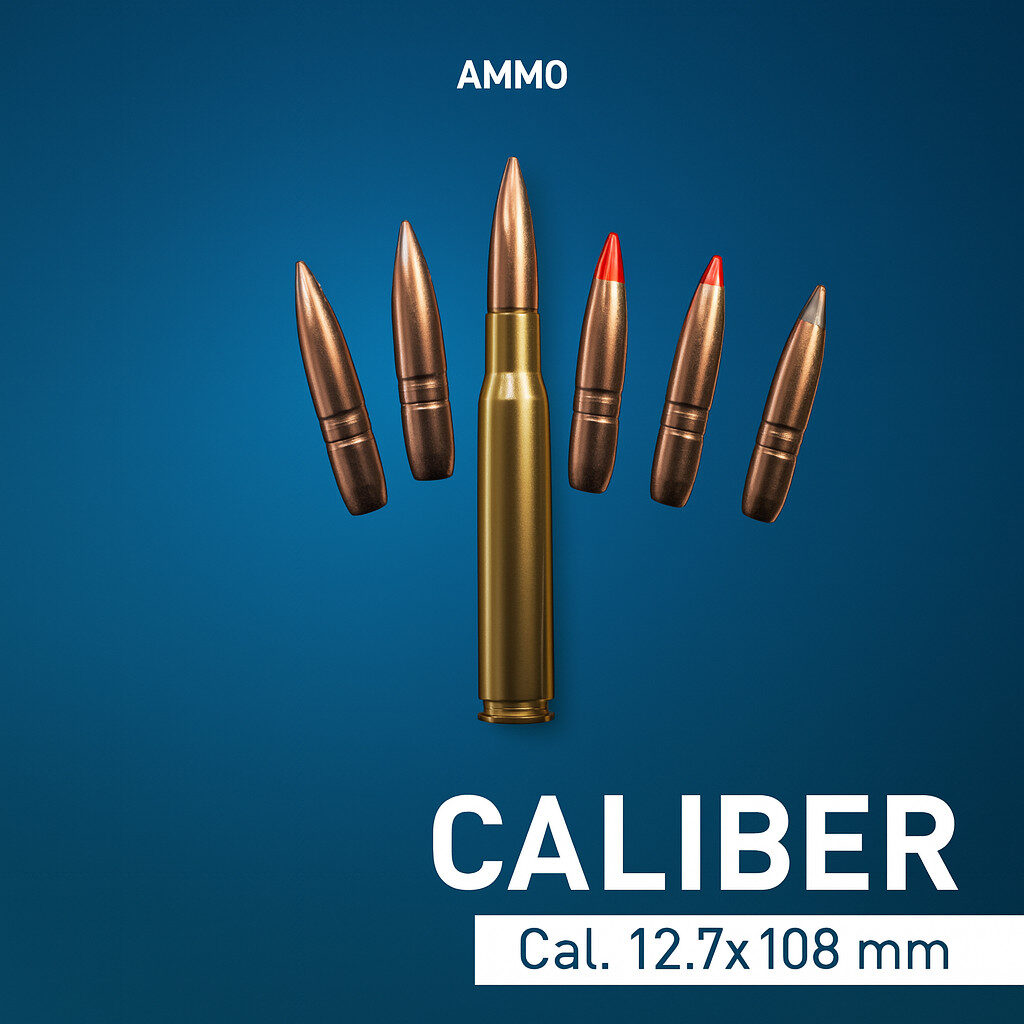
12.7×108mm Ammunition Overview
The 12.7×108mm is a heavy machine gun and anti-materiel rifle cartridge developed by the Soviet Union in the 1930s. It is equivalent in purpose and performance to the NATO .50 BMG (12.7×99mm) round but slightly longer and used primarily in Eastern Bloc and post-Soviet states.
Technical Specifications
-
Caliber: 12.7 mm
-
Case Length: 108 mm
-
Overall Length: ~147.5 mm
-
Bullet Weight: ~48-60 grams (varies by type)
-
Muzzle Velocity: ~800–900 m/s
-
Muzzle Energy: ~15,000–18,000 joules
-
Case Type: Rimless, bottleneck
Common Variants
-
B-32 (API):
Armor-Piercing Incendiary — hardened steel core with incendiary composition, capable of penetrating light armor and igniting fuel or ammunition. -
BZT-44 (API-T):
Armor-Piercing Incendiary Tracer — like B-32 but with tracer element to visually follow trajectory. -
BS (APHC):
Armor-Piercing High-Capacity — with tungsten carbide core for superior armor penetration. -
MDZ:
High-Explosive Incendiary — designed for air targets, detonates on impact. -
ZP:
Incendiary Tracer — primarily for targeting and spotting.
Platforms
Used in:
-
NSV, DShK, Kord heavy machine guns
-
Yak-B rotary cannon (on helicopters)
-
Anti-materiel rifles such as the KSVK, OSV-96, and others
Applications
-
Anti-personnel and anti-material use
-
Light armor penetration
-
Air defense (low-flying aircraft, drones)
-
Sniper and long-range interdiction
Countries Using It
-
Russia and most post-Soviet states
-
China (Type 54 HMG)
-
North Korea, Iran, Serbia, and many others who use Warsaw Pact-era weapons.